How to Choose Mosquito Repellent Products for Farms Under Veterinary Antibiotic Reduction Policies
With veterinary antibiotic reduction initiatives rolling out, more scaled farms are writing "use less medication, prevent disease first" into their management goals. How to choose farm mosquito repellent products now has a new answer in this trend: it is no longer just "does it kill mosquitoes" but also ingredient safety, animal safety, and alignment with antibiotic reduction. This article gives a five-dimension buying guide for the antibiotic-reduction era.
1. What Is Veterinary Antibiotic Reduction
National antibiotic reduction initiatives guide scaled farms to use antibiotics more carefully and less often, built on "prevention beats treatment":
- Regulated use: follow veterinary drug regulations - no abuse, no overdosing
- Reduced use: lower medication demand by improving the rearing environment and strengthening disease prevention
- Certification-oriented: reduction outcomes tie into antibiotic-free certification and inspections
For farms, this means environmental and vector management is no longer "a nice-to-have" but a key link in making reduction work.
2. How Mosquito Control Supports Antibiotic Reduction
Why does mosquito and fly control help reduce antibiotics? The logic is direct:
- Cut insect-borne disease: mosquitoes and flies transmit Japanese encephalitis and other diseases (see our vector-disease primer); cutting transmission reduces disease
- Lower stress: bites irritate livestock, reduce rest, and weaken resistance; fewer pests, less stress
- Use less medication: less disease and stress means lower demand for antibiotics and treatment
In short: control the pests and you are acting "upstream" of antibiotic reduction.
3. Five Dimensions for Choosing Repellent Products
1. Ingredient Safety (priority one)
- Prefer products with proper registration; compliant ingredients that passed safety evaluation
- Avoid unregulated, unregistered, or highly toxic products
- Proper products are relatively safe for livestock at recommended use rates - follow label directions
2. Animal Safety
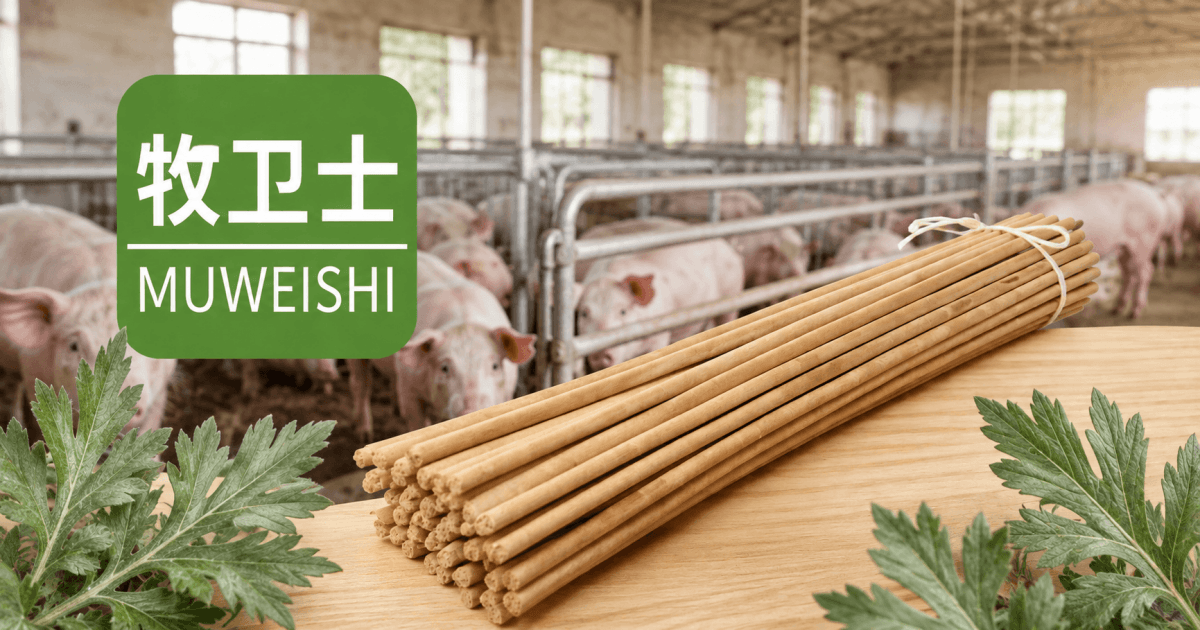
- For pregnant animals, young animals, and farrowing rooms, prefer the wormwood stick for a mild, low-irritation scent
- Use standard sticks in routine sheds for full repellency
- Do not use stick coils in silkworm or bee facilities to avoid harming beneficial insects
3. Alignment With Antibiotic Reduction
- Plant ingredients like wormwood are both traditional repellents and fit the "natural, low-chemical-burden" narrative of reduction
- Choose combinations that repel first without introducing new chemical burden
4. Burn Quality and Effect
- Registered products burn steadily without breaking, with long protection (8-10 hours long, 3-4 hours short)
- Low ash and even smoke reduce shed pollution
5. Manufacturer Qualifications
- Choose a source factory with qualifications and stable quality control (like the Mushengwei source factory) for reliable bulk quality and pricing
- For private-label or OEM customization, evaluate the factory's capacity and customization capability
4. Selection Reference Table
| Scenario | Recommended product | Reduction alignment |
|---|---|---|
| Farrowing rooms, crates, pregnant animals | Wormwood 45cm | Plant ingredient, mild and gentle |
| Routine pig/cattle/sheep sheds | Standard 1.2m | Efficient, controllable dosage |
| High pest-density periods | Heavy-duty 1.2m | Strong suppression, fewer applications |
| Private label / customization | OEM customization | Formula per need, unified quality |
5. Common Misconceptions
- Myth 1: stronger is always better - strong is not the same as safe; match the product to the scenario, and keep it gentle for pregnant and young animals
- Myth 2: mosquito control has nothing to do with antibiotic reduction - insect-borne disease is a major driver of antibiotic use; pest control is indirect reduction
- Myth 3: price is all that matters - unverified products may contain non-compliant ingredients and threaten food safety
Summary
Under veterinary antibiotic reduction policies, choose farm repellent products across five dimensions - ingredient safety, animal safety, reduction alignment, burn quality, and manufacturer qualifications - and treat pest control as an upstream action of reduction. Mushengwei offers standard, heavy-duty, and wormwood sticks plus OEM customization. Feel free to contact us for solutions and wholesale pricing.
FAQ
What is the veterinary antibiotic reduction policy and how does it affect farms?
National policy drives scaled farms to use antibiotics more carefully and in smaller amounts - the direction is "use less, use well, prevent disease before it starts". For farms, environmental management and disease prevention become more important: suppress insect-borne disease risk from mosquitoes and flies, keep animals healthier, and antibiotic use naturally drops, making it easier to pass antibiotic-free certification and inspections.
What should farms check when buying repellent products under antibiotic reduction?
Check ingredient safety first - choose registered products and avoid unregulated or highly toxic ingredients. Second, check animal safety - use mild wormwood formulas in farrowing rooms and areas with pregnant or young animals. Third, check manufacturer qualifications - choose a source factory with stable quality control. Fourth, check burn quality and effect - proper products burn steadily with long protection and low ash. Together these ensure effective mosquito control without adding drug burden.
Which scenarios suit the wormwood coil?
The wormwood coil adds wormwood plant extract for a mild, low-irritation scent, suiting farrowing rooms, crates, and areas with pregnant animals. Wormwood is also a traditional repellent plant, fitting the natural-ingredient trend under antibiotic reduction. For routine mosquito control, standard or heavy-duty coils remain the choice for stronger repellency.