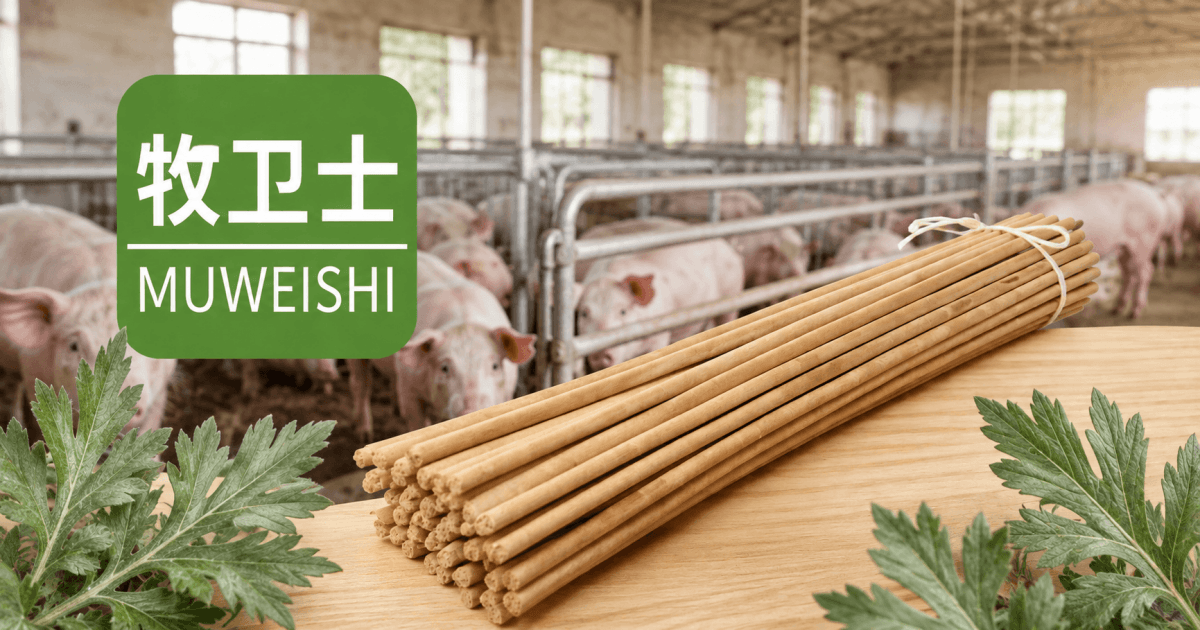

Do Livestock Mosquito Coils Really Kill Mosquitoes? The Active-Ingredient Principle Explained
Farmers lighting livestock mosquito coils often wonder: the smoke is smoke, but what actually kills the mosquitoes? Without understanding the principle, it's easy to fall for the "choking smoke = effective" illusion, or buy inferior products. This article explains the mosquito-killing principle and active ingredients of livestock coils, and how to judge real effectiveness from ingredients and craft, so farmers buy right and use right.
1. The Killing Principle: Knockdown + Repellence, Working Together
The mechanism of a livestock coil splits into two layers:
- Knockdown action: when lit, the active ingredient releases as smoke particles into the air; mosquitoes that inhale or contact it have their nervous system disrupted and quickly lose flight, dropping down knocked out
- Repellent action: the continuous smoke forms a concentration gradient around the shed, driving mosquitoes to avoid the covered area, lowering overall density inside
Key point: effectiveness comes from compliant ingredient levels plus stable sustained release — not from choking smoke. Heavy smoke does not mean stronger killing; the real indicators of a qualified product are the active ingredient level and release stability.
2. How to Read the Active Ingredients
To judge a coil's "fighting power," look at the ingredients first:
- Labeled active ingredient and content: compliant products label the active ingredient (e.g., pyrethroid class) and its level; adequate content is what delivers knockdown power
- Slow-release carriers: they affect how evenly smoke is released and how long it lasts; a good product burns steadily for hours with continuous release
- Targeted formulations: some products add natural ingredients like wormwood, suited to sensitive areas with pregnant or young animals
For more detail on ingredients and safety, see the livestock coil ingredients explainer.
3. Livestock Coils vs Household Coils
| Dimension | Livestock coil | Household coil |
|---|---|---|
| Size | Longer and thicker (e.g., 1.2 m), 8-10 h burn | Small, 1-2 h burn |
| Formula | Tuned for livestock safety; different concentration and irritation | Designed for indoor home use |
| Labeling | Follows agricultural product rules | Follows household chemical rules |
Don't substitute household coils for farm use — burn time, coverage and formula don't line up. Choose the specification that matches your shed type and animals; see livestock vs household coils.
4. How to Judge Effectiveness and Authenticity
- Buy from reputable manufacturers with registration info: compliant products carry pesticide registration/test details; avoid unbranded goods however cheap
- Check burn persistence: whether a single coil burns steadily for its labeled duration is a direct reflection of formula and craft
- Small-scale on-site trial: light a small area first and observe density change; buy in bulk only after results meet the bar
- Compare peer products: cross-compare ingredient levels, burn time and price — see the livestock coil selection guide
5. Positioning of Common Types
| Type | Mosquito-control positioning |
|---|---|
| Standard coil | Baseline control for ordinary sheds; best value |
| Heavy-duty coil | Large areas / high-density scenes; strong formula |
| Aiye (wormwood) coil | Sensitive areas with pregnant/young animals; gentle formula with repellence |
Whether mosquitoes die, and how many, comes down to ingredients and craft — not smoke volume. Understand the principle, recognize the ingredients, and every yuan spent on livestock coils buys real quiet in the shed. To pick the right type and dosage for your sheds, feel free to contact us.
FAQ
What kills mosquitoes in a livestock coil?
It comes down to the dual action of the active ingredient — knockdown and repellence. When lit, the active ingredient releases as smoke particles; mosquitoes that inhale or contact it are knocked down, while the smoke also forms a repellent barrier that keeps them away from the shed. A qualified product works through compliant ingredient levels plus stable sustained release — not through choking smoke.
How do you tell whether a livestock coil works well?
Check three things: ingredients and content — compliant products label the active ingredient and its level, which is what gives knockdown power; burn persistence — whether a single coil burns steadily for hours releasing continuously; and formulation/craft — slow-release carriers and molding affect whether smoke is released evenly. Buy from reputable manufacturers with registration and test info; avoid unbranded goods.
What is the difference between livestock and household coils?
Livestock coils are designed for farm scenarios: larger size and longer burn time for large-area shed coverage; formulas adjusted for livestock safety, with different odor and irritation from household types; and labeling follows agricultural product rules. Choose the right specification for your shed type and animals — don't substitute household coils.
Does burning a livestock coil affect the animals?
Reputable manufacturers tune formulas for farm use, and at the recommended dosage the coils are safe for livestock. Three cautions: keep the shed ventilated, control dosage by area (don't crowd too many lit coils), and use gentle formulas (like the aiye/wormwood type) in areas with pregnant or young animals. If you have concerns about ingredients and safety, consult the manufacturer or relevant safety references.