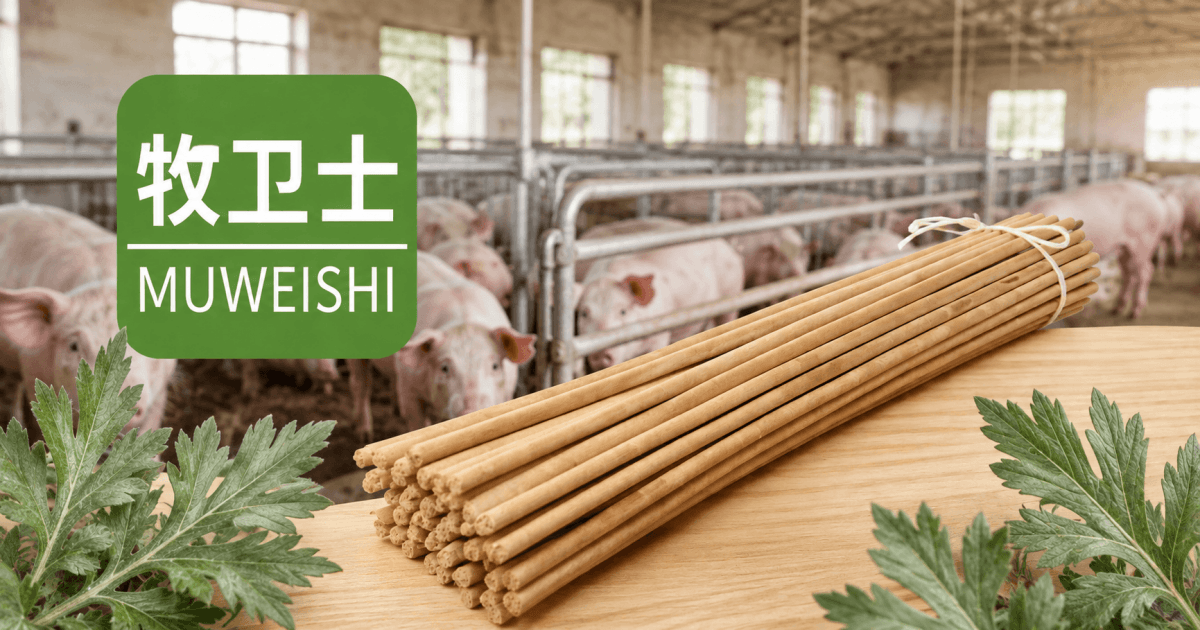

How to Choose Heavy-Duty Livestock Mosquito Repellent?
In the hot and humid summer season, mosquito and fly density on farms surges, and ordinary coils often struggle against heavy infestations and stuffy environments. Heavy-duty livestock mosquito coils rely on a strong formula to deliver more effective mosquito killing and fly repellency in high-density, hot, and humid housing and outdoor free-range settings. This article walks through the selection criteria for the strong livestock coil, with practical purchasing advice for hot, humid, and summer outdoor scenarios.
1. Why Hot, Humid Farms Need the Strong Type
Farms are not homes. Mosquitoes and flies breed fast and in high density, and in the scenarios below the standard type often falls short:
- Hot, humid housing: Pig, cattle, and sheep sheds are stuffy and damp in summer, with intense mosquito and fly activity. Standard formulas diffuse slowly after lighting and have a lower knockdown rate.
- Open and semi-open farms: Strong airflow makes it hard for standard coils to maintain an effective concentration, leaving gaps in overnight protection.
- Outdoor free-range and woodland farming: Free-range chickens and geese occupy wide, open spaces with many mosquito sources, demanding stronger knockdown and repellency.
- Manure and drainage areas: Fly density is extremely high; standard coils have limited fly-repellent effect, so a strong formula that tackles both mosquitoes and flies is needed.
The strong type raises the active-ingredient ratio and release efficiency, taking effect within 10 minutes, with better knockdown and repellency than the standard type. For a full mosquito-control plan across scenarios, see How to Kill Mosquitoes Effectively in a Farm.
2. Core Differences: Strong vs Standard vs Wormwood
MUWEISHI livestock coils come in three complementary types. Clarify their differences before choosing:
| Type | Formula feature | Suitable scenario | Priority |
|---|---|---|---|
| Standard | Basic efficient formula | Daily protection, medium-low density | Best value |
| Wormwood | Adds wormwood plant extract, mild and low-irritation | Pregnant and young animals, nursery pens | Best for pregnant/young stock |
| Strong | Strong formula, stronger mosquito killing and fly repellency | High density, hot and humid, outdoor free-range | Top pick for high-pressure sites |
All three use a green, safe formula with stable burning and a high ignition point that resists breaking. The difference lies in active-ingredient concentration and release intensity. The strong type is not "more toxic"-it simply releases more active ingredient per unit of time to handle high-density pests and open, well-ventilated environments.
3. Spec Selection for the Strong Type: Long vs Short
The strong type is offered in two specs. Match the choice to housing area and usage period:
- 1.2m long: 400 sticks per case, about 8-10 hours per stick, covers roughly 60-80 sqm. Suited to large pens and open farms for overnight protection-one stick covers a standard pig pen or one poultry-house aisle.
- 45cm short: Configurable on demand, about 3-4 hours per stick, covers roughly 20-30 sqm. Suited to small pens, nursery boxes, temporary spaces, or short midday top-up protection.
In hot, humid conditions, peak mosquito and fly activity runs from evening to early morning, so the long stick's 8-10 hour overnight coverage is more cost-effective. For short fly-repellent bursts during stuffy afternoons, the short stick is flexible and avoids waste.
4. Usage Tips and Scenario Fit
The strong type is efficient, but placement and usage determine real-world results:
- Count sticks by area: One long stick per 60-80 sqm, one short stick per 20-30 sqm. Increase slightly for oversized or well-ventilated spaces.
- Distribute evenly: Place evenly along aisles and upwind of manure areas. Avoid clustering in one spot, which causes uneven concentration.
- Place on dry ground after lighting: Hot, humid floors wick moisture. Damp ground undermines burning stability, so always pick a dry spot.
- Mind fire safety: Do not use in strong wind or directly under fans, and keep away from straw, feed bags, and other flammables.
- Seal after opening to prevent moisture: A damp strong stick burns incompletely and releases less. Storage matters just as much.
For pig, cattle/sheep, and poultry specifics, combine the layouts in Pig Farm, Cattle & Sheep, and Poultry applications.
For whether the strong type suits pregnant or young animals, and the ban on silkworm and bee farming, see Is Livestock Mosquito Coil Safe?.
A heavy-duty livestock mosquito coil is the efficient mosquito-killing and fly-repellent solution for hot, humid, high-density, and outdoor free-range scenarios. The key to selection is confirming the scene's pressure and matching the spec. As a source factory, MUWEISHI supplies the strong, standard, and wormwood types in full, all at factory-direct prices. For strong-type quotes and custom solutions, contact us.
FAQ
What is a heavy-duty livestock mosquito repellent and when do you need it?
A heavy-duty livestock mosquito coil uses a strong formula with a higher active-ingredient ratio and faster release, taking effect within 10 minutes, for high-density, hot, humid, and outdoor free-range scenarios where standard coils fall short. It is not more toxic; it simply releases more active ingredient per unit of time, and it suits stuffy pig, cattle, and sheep sheds, open farms, free-range chickens and geese, and manure and drainage areas with heavy fly pressure.
What are the specs of the strong livestock mosquito coil?
The strong type comes in a 1.2m long stick with 400 sticks per case, about 8-10 hours burn, and roughly 60-80 sqm coverage for overnight protection in large pens, plus a 45cm short stick with about 3-4 hours burn and 20-30 sqm coverage for small pens, nursery boxes, and short midday top-ups. Count about one long stick per 60-80 sqm or one short stick per 20-30 sqm, increasing slightly for oversized or well-ventilated spaces.
How is the strong livestock coil different from standard and wormwood types?
All three use a green, safe formula with stable burning and a high ignition point; they differ in active-ingredient concentration and release intensity. The standard type is the best value for daily medium-low density control, the wormwood type is mild and low-irritation for pregnant and young animals, and the strong type delivers stronger mosquito killing and fly repellency for high-pressure sites.