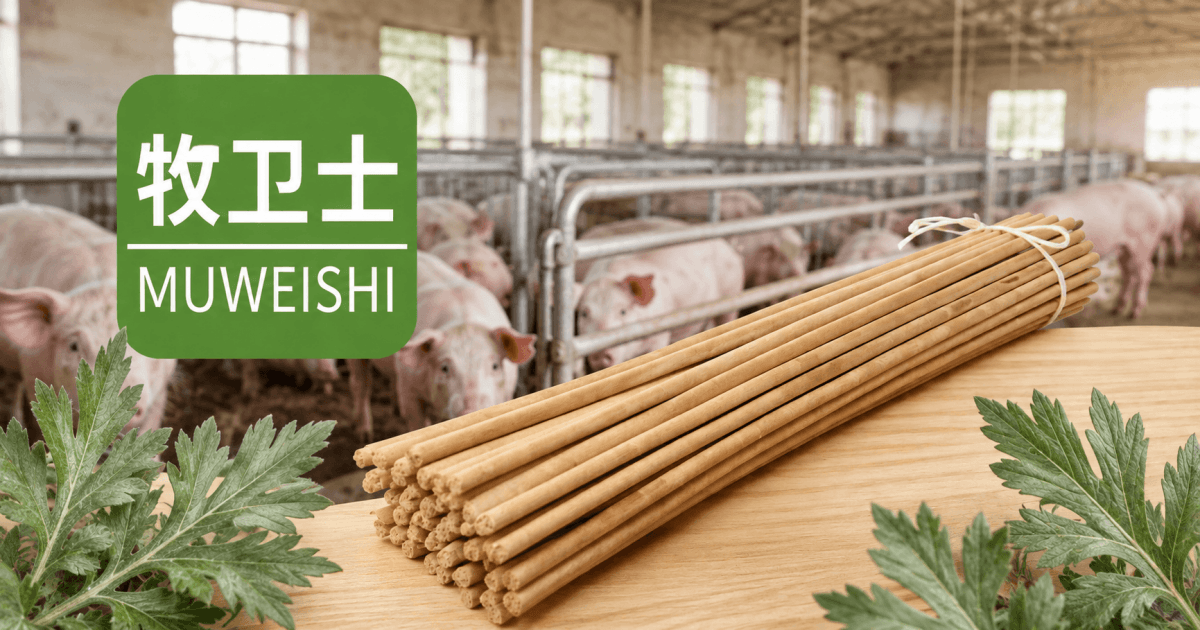

How Many Livestock Mosquito Coils Per Shed?
How many livestock mosquito coils should you light per shed? This is one of the most common questions farmers ask when purchasing and placing coils. Too few and coverage falls short, letting mosquitoes and flies keep coming back; too many and you waste cost, and excessive concentration may even stress the stock. The right approach is to calculate stick count by shed area, mosquito density, and ventilation, then distribute the coils evenly. Using MUWEISHI livestock coils as the reference, this article gives a stick-count formula and example table you can apply directly. For the broader control strategy, start with How to Kill Mosquitoes Effectively in a Farm.
1. Baseline Stick-Count Standard
Different coil sizes cover different areas, so the count starts from the spec:
- 1.2m long stick: burns about 8-10 hours per stick, covers about 60-80 sqm per stick-suited to overnight protection in large pens such as finishing pig houses, open cattle and sheep sheds, and caged poultry houses
- 45cm short stick: burns about 3-4 hours per stick, covers about 20-30 sqm per stick-suited to small pens, brooder boxes, farrowing corners, and short top-ups during peak hours
Baseline formula: shed area ÷ coverage per stick = stick count. For example, a 200 sqm finishing pig pen using long sticks: 200 ÷ 70 ≈ 2.9, round up to 3 sticks (use the mid-range coverage value of 70 sqm). Always round up-after counting, lean slightly high rather than short, because a single under-covered zone becomes a mosquito refuge. For a detailed comparison of burn time and coverage between the two specs, see How Long Does One Livestock Mosquito Coil Burn and How Much Area Does It Cover?.
2. Adjustment by Density and Ventilation
The baseline formula only accounts for area. In practice you must adjust for mosquito density and ventilation strength, because both change how fast active ingredients are depleted or dispersed:
| Factor | Adjustment | Note |
|---|---|---|
| Low density, closed shed | Baseline (1.0) | Standard environment, mild season |
| High density, summer peak | 0.8x area factor | Each long stick rated at 48-64 sqm, count rises ~25% |
| Strong ventilation, open or semi-open shed | 0.8x area factor | Wind disperses active ingredients, denser placement needed |
| Pregnant/young animals, farrowing or nursery | Wormwood short stick, baseline | Mild scent, do not over-place |
Rule of thumb: high density or strong ventilation, use a 0.8x area factor and add sticks; low density or weak airflow, baseline is enough. Never reduce below baseline to save cost-under-dosing is the main reason farms see "no effect."
The 0.8x factor means you divide the effective coverage by 0.8: a long stick that normally covers 60-80 sqm is treated as covering 48-64 sqm. The same logic applies to the short stick (16-24 sqm). This is not arbitrary-it reflects that in dense or windy conditions, a stable concentration field needs more sticks per unit area.
3. Example Calculation Table
Here are reference stick counts for common sheds, applying the formula above. These are starting points-adjust to your own mosquito pressure and observe results over a few nights:
| Shed scenario | Area | Spec / type | Factor | Sticks |
|---|---|---|---|---|
| Finishing pig pen | 200 sqm | 1.2m long, Standard | 1.0 | 3-4 |
| Finishing pig pen (summer peak, open) | 200 sqm | 1.2m long, Strong | 0.8 | 4-5 |
| Nursery pen | 50 sqm | 45cm short, Wormwood | 1.0 | 2 |
| Farrowing pen (sow + piglets) | 30 sqm | 45cm short, Wormwood | 1.0 | 1-2 |
| Open cattle/sheep shed | 150 sqm | 1.2m long, Strong | 0.8 | 3 |
| Poultry house (high-density cages) | 120 sqm | 1.2m long, Strong | 0.8 | 2-3 |
Note: round up after counting. Farrowing and nursery pens prefer the Wormwood stick for its mild, low-irritation scent; high-density or strong-airflow scenarios prefer the Strong stick for its stronger formula.
4. Even Distribution Matters More Than Count
Even with the right count, uneven placement still fails. A cluster of coils in one corner leaves the far end of the shed unprotected, while a single under-covered gap becomes a mosquito refuge. Only even distribution builds a stable concentration field across the whole shed:
- Space sticks evenly along aisles: distribute sticks along pen aisles and upwind of manure areas at roughly equal intervals. As a rough guide, divide the shed length by the stick count and place one at each interval
- Avoid dead corners and wind funnels: corners, doorways, and fan-blast zones have unstable concentration-shift sticks slightly inward or densify placement there
- Layered sheds need layered placement: for multi-tier cage houses or split-level barns, calculate sticks per area for each level-do not only place on the lower floor
- Light early at dusk: peak mosquito and fly activity runs evening to early morning. Light all points 10-15 minutes early so effective concentration is already in place when the peak hits
For finer point-layout methods including upwind/downwind logic and spacing by pen type, see How to Place Mosquito Coils on a Farm for Best Results.
5. Common Mistakes to Avoid
A few habits undermine even a correct stick count:
- Stacking coils in one spot: concentrates effect locally, leaves most of the shed unprotected
- Placing on damp ground: pen floors wick moisture-damp ground undermines burning stability and shortens effective burn time. Use a dry spot or a dry brick board
- Ignoring ventilation changes: a shed that is closed at night but open during peak heat may need different counts-check both conditions
- Using the same type year-round: rotate standard, wormwood, and strong types by season and livestock stage to avoid adaptation
Stick count is not a guess-it follows three steps: "calculate baseline count by area + adjust for density and ventilation + distribute evenly." One long stick per 60-80 sqm, one short stick per 20-30 sqm; add sticks at a 0.8x factor for high density or strong ventilation. As a source factory, MUWEISHI offers the standard, wormwood, and strong types in full and both long and short specs, with custom solutions available. For stick-count estimates by shed area and pricing, contact us.
FAQ
How many livestock mosquito coils should I light per shed?
Calculate baseline count as shed area divided by coverage per stick using the mid-range value: a 1.2m long stick covers about 60-80 sqm with about 8-10 hours burn, and a 45cm short stick covers about 20-30 sqm with 3-4 hours burn. For example, a 200 sqm finishing pig pen is 200 divided by 70, about 2.9, rounded up to 3-4 long sticks.
How do I adjust mosquito coil count for high mosquito density or strong ventilation?
For high density or strong ventilation, use a 0.8x area factor, meaning a long stick is treated as covering 48-64 sqm and a short stick 16-24 sqm, which raises the count by about 25%. A 200 sqm finishing pen at summer peak with an open shed runs about 4-5 long strong sticks, an open 150 sqm cattle or sheep shed about 3, and a 120 sqm high-density poultry house about 2-3.
How many coils for a nursery or farrowing pen?
A 50 sqm nursery pen takes about 2 short wormwood sticks and a 30 sqm farrowing pen (sow plus piglets) about 1-2 short wormwood sticks at baseline. Always round up after counting, prefer the mild wormwood stick for farrowing and nursery pens, and never reduce below baseline to save cost because under-dosing is the main reason farms see no effect.