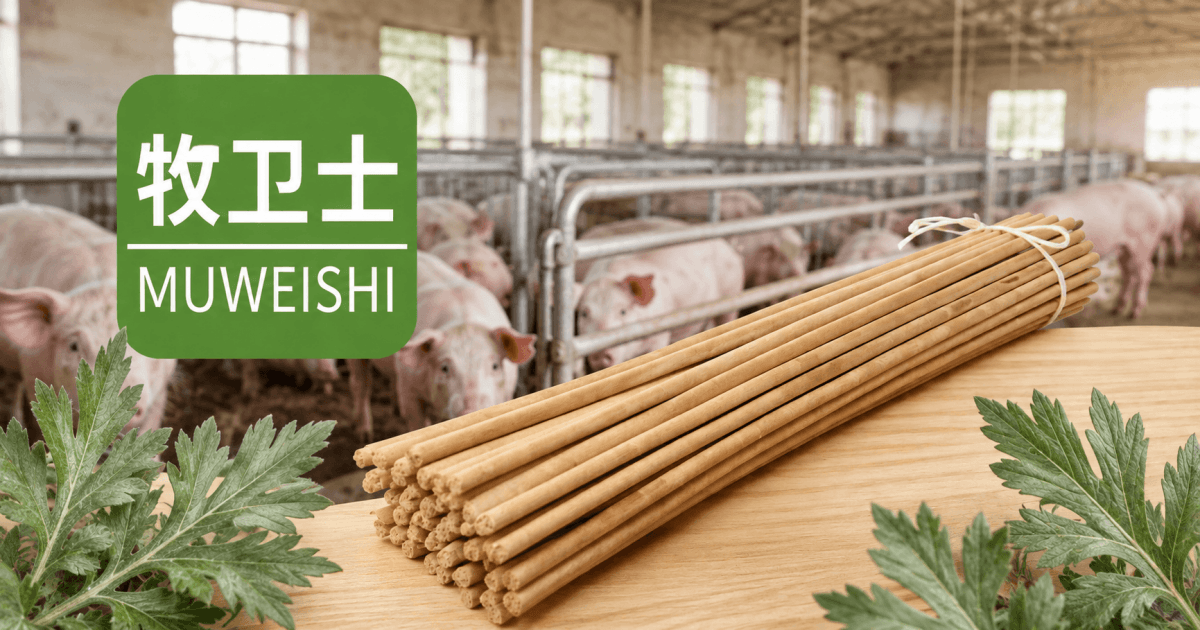

Integrated Pest Management (IPM) for Livestock Farms: Beyond Mosquito Coils
Pests on livestock farms go beyond mosquitoes — flies, biting midges, stable flies, and ticks also harass animals, transmit diseases, and reduce productivity. Relying solely on mosquito coils cannot address the full spectrum of pests. The internationally recognized approach is IPM (Integrated Pest Management): a four-pillar framework combining chemical, physical, biological, and cultural controls. This article explains how to implement IPM on livestock farms, with MUWEISHI mosquito coils playing a key role in the chemical control pillar.
1. What is IPM and Why Do Farms Need It?
The core philosophy of IPM: don't rely on a single method — combine multiple approaches for sustained pest control at the lowest environmental and health cost. Compared to reactive "spray when you see pests," IPM offers:
- Reduced chemical dependence: Physical and biological methods share the burden, lowering chemical use and residue risk
- Delayed resistance: Rotating multiple methods prevents pests from developing resistance
- Year-round effectiveness: Season- and pest-specific strategies, not just a summer solution
- Better cost control: Prevention-first with targeted treatment is cheaper long-term than reactive spraying
For livestock farms, IPM upgrades pest control from "emergency response" to "routine management."
2. Major Livestock Farm Pests
| Pest | Impact | Active season | Primary breeding sites |
|---|---|---|---|
| Mosquitoes | Biting stress, transmits JE/swine fever | Late spring–early autumn (May-Oct) | Standing water, drains, troughs |
| Flies (house fly, stable fly) | Feeding disruption, bacteria, reduced milk yield | Year-round (summer peak) | Manure, feed residue, waste |
| Biting midges (no-see-ums) | Mass biting, dermatitis, bluetongue virus | Spring-summer (Apr-Aug) | Damp soil, decaying organics |
| Ticks | Blood-feeding, babesiosis, Lyme disease | Spring-autumn (Mar-Nov) | Grass, shrubs, animal bodies |
Different livestock types require different priorities: pig farms focus on mosquitoes and flies; dairy farms on flies and stable flies; grazing cattle/sheep on ticks and midges.
3. Chemical Control: The Role of Mosquito Coils
3.1 Core Advantages
- All-night continuous release: 1.2 m long coils burn 8-10 hours, covering the full nocturnal mosquito activity window
- Even spatial distribution: Smoke reaches corners that sprays miss
- Simple operation: Light and place — no equipment or expertise needed
- Multi-species effectiveness: Repels mosquitoes, midges, and some fly species
3.2 Product Selection
- Standard for moderate pest density environments
- Strong for high-density pests, heat, and humidity
- Wormwood for sensitive areas like sow and nursery pens
3.3 Chemical Control Boundaries
Mosquito coils are not a silver bullet — they are largely ineffective against ticks, and less effective against flies than dedicated fly control products. Pair with:
- Space spraying: Evening mist spraying in pens kills flying insects; pairs well with coils
- Residual spraying: Long-lasting insecticide on walls and posts targets resting flies and mosquitoes
- Bait stations: Fly baits or sticky traps combine physical and chemical control
Follow withdrawal periods for chemical use; avoid spraying near feed and water. Use mild formulas in pregnant and young animal areas.
4. Physical Control: The First Line of Defense
Physical methods are the lowest-cost, most sustainable approach:
- Insect screening: Install 16-18 mesh screens on enclosed pen windows and doors
- Insect light traps: UV traps in milking parlors and feed rooms attract and electrocute flying insects at night
- Sticky traps/strips: Hang from posts and beams, one per 10-15 m², for both monitoring and control
- Fans/ventilation: Maintain airflow > 0.5 m/s to disrupt fly flight and landing
- Light management: Turn off pen lights at dusk or use yellow sodium lamps (less attractive to insects)
5. Biological Control: Nature's Pest Management
Biological control uses natural enemies and bio-agents — green and residue-free:
- Larvivorous fish: Stock mosquito fish (Gambusia) or carp in farm ponds and water reservoirs to consume mosquito larvae
- Bti (Bacillus thuringiensis israelensis): Apply to standing water and drains; specifically kills mosquito larvae, safe for livestock and humans
- Parasitoid wasps: Some enclosed poultry houses release parasitoid wasps to control fly pupae
- Repellent plants: Plant mint, citronella, and pyrethrum around pens to create natural repellent barriers
Bti is a commonly used biological larvicide in farm IPM. Effective within 24 hours of application to standing water, with 2-4 weeks residual activity. Ideal for pre-rainy season and near-water treatment.
6. Cultural & Environmental Control: Addressing Root Causes
Cultural control is the most fundamental and long-lasting approach:
- Manure management: Remove manure 1-2 times daily; store downwind far from pens; cover or seal for composting to eliminate fly breeding
- Feed management: Promptly clean spilled feed; wash troughs daily to remove fly attractants
- Water management: Eliminate all standing water around pens (puddles, old tires, empty containers); keep drains clear
- Bedding management: Replace poultry bedding regularly; keep dry — damp bedding is a fly larvae breeding ground
- Vegetation control: Regularly trim weeds within 5-10 m of pens to reduce tick and midge habitat
- Biosecurity: Vehicles and personnel should pass pest inspection before entering production areas
7. Farm IPM Calendar
| Month | Key pests | Core actions |
|---|---|---|
| Jan-Mar | Flies (low density) | Manure management, sanitation, inventory check |
| Apr-May | Mosquitoes, midges emerging | Bti application, screen inspection, begin coil use |
| Jun-Aug | Peak mosquitoes, flies, midges | Strong coils as主力, space spraying, increased density |
| Sep-Oct | Mosquitoes declining, flies persist | Reduce coil density, intensify manure/water management |
| Nov-Dec | Flies dominant | Physical controls primary, sanitation, annual IPM review |
8. IPM Implementation Tips
- Start with monitoring: Hang sticky traps at key pen locations; record weekly pest counts to guide control intensity
- Set action thresholds: Define "how many pests trigger which control level" to prevent over- or under-treatment
- Record and review: Maintain a pest control log (products, timing, dosage, results); review annually to optimize
- Train staff: Enable farm workers to identify common pests and perform basic control — build a "everyone participates" culture
IPM is a journey, not a one-time fix. Start with the basic trio — coils + screens + manure management — then progressively add Bti, light traps, and sticky traps. MUWEISHI provides a full range of livestock mosquito coils as the chemical control core, complemented by scenario-specific application guides. Contact us for any pest management needs.
FAQ
What is integrated pest management (IPM) for a livestock farm?
IPM (Integrated Pest Management) is a four-pillar framework combining chemical, physical, biological, and cultural controls instead of relying on a single method. It aims for sustained pest control at the lowest environmental and health cost, with lower chemical dependence, delayed pest resistance, and year-round effectiveness, turning pest control from emergency response into routine management.
How do mosquito coils fit into an IPM program on a livestock farm?
Mosquito coils are the chemical control pillar. MUWEISHI 1.2 m coils burn 8-10 hours to cover the nocturnal mosquito window, and the smoke reaches corners sprays miss. The Standard type suits moderate pest density, the Strong type high-density, heat, and humidity, and the Wormwood type sensitive areas like sow and nursery pens. Coils are largely ineffective against ticks and less effective against flies than dedicated fly products, so pair them with spraying, residual spraying, and bait stations.
What physical and biological controls can reduce mosquitoes and flies on a livestock farm?
Physical controls include 16-18 mesh insect screens on windows and doors, UV light traps in milking parlors and feed rooms, sticky traps hung one per 10-15 m², fans keeping airflow above 0.5 m/s, and yellow sodium lamps that attract fewer insects. Biological controls include stocking larvivorous fish (Gambusia or carp) in ponds, applying Bti to standing water (effective within 24 hours with 2-4 weeks residual activity), releasing parasitoid wasps in enclosed poultry houses, and planting mint, citronella, or pyrethrum around pens.